
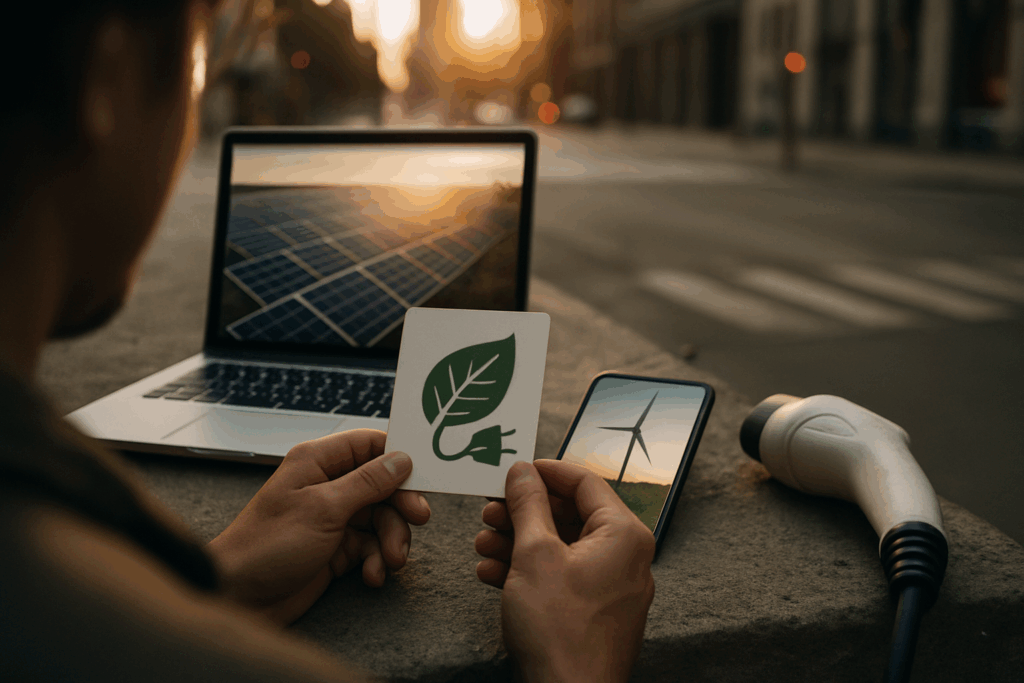
Rapid Evolution in Solar Panel Technology
2026 marked a clear turning point in solar. The long hyped next gen perovskite solar cells finally broke through industry bottlenecks, pushing efficiency levels beyond 30% in commercial applications. That’s not just a lab stat it means more usable energy from smaller surface areas. These new cells are also cheaper to produce and work better in low light conditions, making solar a smarter option in less than ideal climates.
Even more transformative: the materials are flexible and lightweight. That’s opened the door to integration in places traditional panels simply couldn’t go glass façades, curved walls, shaded rooftops, and even awnings on apartment balconies. Cities are becoming energy producers in a way that turns infrastructure into contribution instead of overhead.
From a consumer angle, the story doesn’t end at generation. These panels are pairing seamlessly with home energy storage systems, turning more households into mini power hubs. Solar in 2026 isn’t just a way to save on your utilities it’s a path to near total grid independence. For homeowners and renters with the right setup, self sufficiency isn’t a pipe dream anymore. It’s a real, installable option.
Smart Grids Are Getting Smarter
Smart grids are no longer just a concept they’re rapidly evolving into intelligent, resilient energy systems that can adapt in real time to shifting demands and conditions. Here’s how the next generation of grid technology is taking shape.
AI Assisted Load Forecasting for Real Time Balance
Modern smart grids are leveraging artificial intelligence to forecast and respond to energy demand in real time. This capability boosts both efficiency and stability across electrical systems.
Dynamic response: AI models analyze usage patterns and environmental variables to predict load spikes before they happen
Energy savings: Precise forecasting helps utilities reduce overproduction and avoid waste
Consumer benefit: Households connected to smart grids experience fewer blackouts and more stable pricing
Decentralization Through Local Microgrids
As cities and rural communities aim for greater energy independence, microgrids are becoming critical components of sustainable infrastructure.
Localized control: Microgrids can operate independently or in tandem with the main grid
Community resilience: In areas vulnerable to outages, microgrids keep vital services running
Flexible integration: Easily accommodate solar, wind, and emerging storage technologies
Cybersecurity in the Age of Distributed Energy
The downside of highly interconnected energy systems? Increased vulnerability to cyberattacks. In 2026 and beyond, cybersecurity becomes a non negotiable piece of the energy puzzle.
Grid hardening: New protocols are being implemented to protect against breaches
Decentralized defense: Distributed architectures make it harder for single points of failure to bring down the system
Data integrity: Securing energy usage data ensures trust between consumers and utilities
Smart grids aren’t just getting smarter they’re becoming more secure, more decentralized, and better suited to meet the challenges of a sustainable energy future.
Energy Storage: The Missing Piece Is Catching Up
Energy storage has always been the weak link in the clean energy chain. That’s changing fast. New solid state batteries are finally moving from prototype to production, delivering energy densities up to double that of traditional lithium ion packs. These systems are safer, last longer, and open the door for everything from long range electric vehicles to off grid homes that can actually stay off grid.
Then there’s the grid itself. Utility scale storage projects are no longer just experiments they’re becoming non negotiable for solar and wind integration. When the sun dips or wind dies, massive battery banks bridge the gap, keeping power supply stable without defaulting to fossil fuels. In 2026, this kind of infrastructure is going from nice to have to standard operating procedure.
Meanwhile, a quiet revolution is building in the form of second life EV batteries. Once considered e waste, these retired power units are being repurposed into community scale storage or home backup systems. It’s a win win: lower life cycle emissions, lower costs, and more resilient local grids. Circular energy systems aren’t just theory anymore they’re on the ground, working.
Consumer Tech Playing a Bigger Role

Smart meters have quietly gone from utility company gadgets to household power tools. They let homeowners track energy usage in real time no more waiting for that shocking bill at the end of the month. The result? People use less, shift consumption to off peak hours, and save money without guessing. It’s control, not just monitoring.
But the shift doesn’t stop at the meter. Home ecosystems are now syncing solar panels, battery storage, and EV chargers like clockwork. Charge your car when the sun’s out, run your house on battery in the evening, pull from the grid only when it makes sense economically. It’s a dance and it’s getting choreographed by smart software.
Appliances are joining the network, too. Washers, HVAC systems, water heaters they’re all learning when to draw power from solar or stay silent during grid stress. This kind of intelligence used to sound futuristic. Now it’s baked into the latest models.
We’re seeing the rise of homes that actively manage their own energy use like micro utilities. It’s clean, efficient, and when done right nearly invisible to the people living inside. Just lower bills and fewer blackouts.
Government & Global Policy Impacts
As clean energy technologies evolve, so does the global policy landscape. In 2026, legislation and subsidies are playing an increasingly central role in scaling adoption and ensuring that systems work well across regions and platforms.
Powering Local Solutions Through Policy
Government funding is catalyzing a surge in decentralized and community based renewable energy efforts:
2026 subsidies are fueling a wave of community scale solar and wind projects.
Grants and low interest financing are enabling municipalities to invest in localized energy infrastructures.
These projects are not only clean but also support energy equity by lowering energy costs in underserved areas.
Connecting the Clean Tech Ecosystem
Interoperability across clean technologies has moved from ideal to requirement:
Regulatory standards now mandate better software and hardware compatibility among solar panels, inverters, storage units, and smart meters.
This is encouraging the creation of unified energy systems where devices from different manufacturers can work seamlessly together.
Compliance is increasingly enforced, with governments tying funding to adherence.
Urban Building Codes Undergoing a Green Shift
Several G20 countries are enacting city level mandates to future proof new construction:
Urban ordinances adopted in 2026 now demand solar ready designs for all new residential and commercial construction.
These codes include requirements for rooftop orientation, electrical conduit placement, and space allocation for batteries or HVAC integration.
The goal: reduce retrofit costs later by ensuring new buildings are ready for clean energy from day one.
These policies signal a turn toward scalability, efficiency, and intentional infrastructure planning all critical as sustainable technology becomes a pillar of national energy strategies.
The Crossover: Where Sustainable Tech and Computing Merge
Technology isn’t just reshaping clean energy devices it’s transforming how entire energy systems operate in real time. The blending of sustainable tech and advanced computing is accelerating smarter decision making and helping us manage increasingly complex networks.
Edge Computing in the Energy Grid
Modern smart grids are generating massive amounts of data. Edge computing brings the processing power closer to the data source, enabling instantaneous reactions to changing grid conditions.
Key benefits of edge computing:
Real time energy decisions: Load balancing and voltage control executed near instantaneously
Improved efficiency: Faster data processing reduces latency and system strain
Decentralized control: Increases resilience in local grid segments
Quantum Computing Takes on Climate Complexity
Climate and energy systems are deeply interconnected and too complex for traditional models. Quantum computing is emerging as a powerful tool to simulate and optimize these systems at scales previously unreachable.
Emerging applications:
Grid optimization under countless variable conditions
Climate energy modeling to forecast renewable performance based on weather
Resource allocation for global energy strategies
For a deeper dive, check out this guide: What You Need To Know About Quantum Computing in 2026
As computing and sustainability co evolve, expect more innovation where clean energy meets cutting edge tech.
What to Watch as We Head Into 2027
Sustainable technology is tightening its focus beyond performance and scalability. As solar goes mainstream, a new problem grows louder: what happens at the panel’s end of life? This year, companies are making real headway in solar panel recycling. Advanced chemical separation techniques and automated disassembly systems are recovering high quality materials especially rare and valuable components like silicon and silver at rates that were unthinkable a few years ago. This matters, not just for minimizing landfill waste, but for reducing the need to mine rare earth elements in the first place.
Speaking of rare earths, 2026 saw a surge in viable alternatives. Lab grown materials and redesigned components are easing our dependency on unstable global supply chains. From motors to batteries, developers are swapping out traditional materials for earth friendlier options and the performance gaps are closing fast.
Meanwhile, AI powered grid systems are expanding into places that were left behind in earlier tech booms. In parts of Asia, Africa, and Latin America, lightweight AI models are helping microgrids stay stable and efficient, even with unpredictable supply and demand. These tools are getting cheaper, and that opens new doors for clean energy access where it’s needed most.
And finally, the conversation is getting bigger. 2027 is set to deepen the dialogue around ethical deployment. Who benefits from these technologies? Who bears the environmental cost? Equity, transparency, and justice are moving from the sidelines to the planning table and that shift is long overdue.