
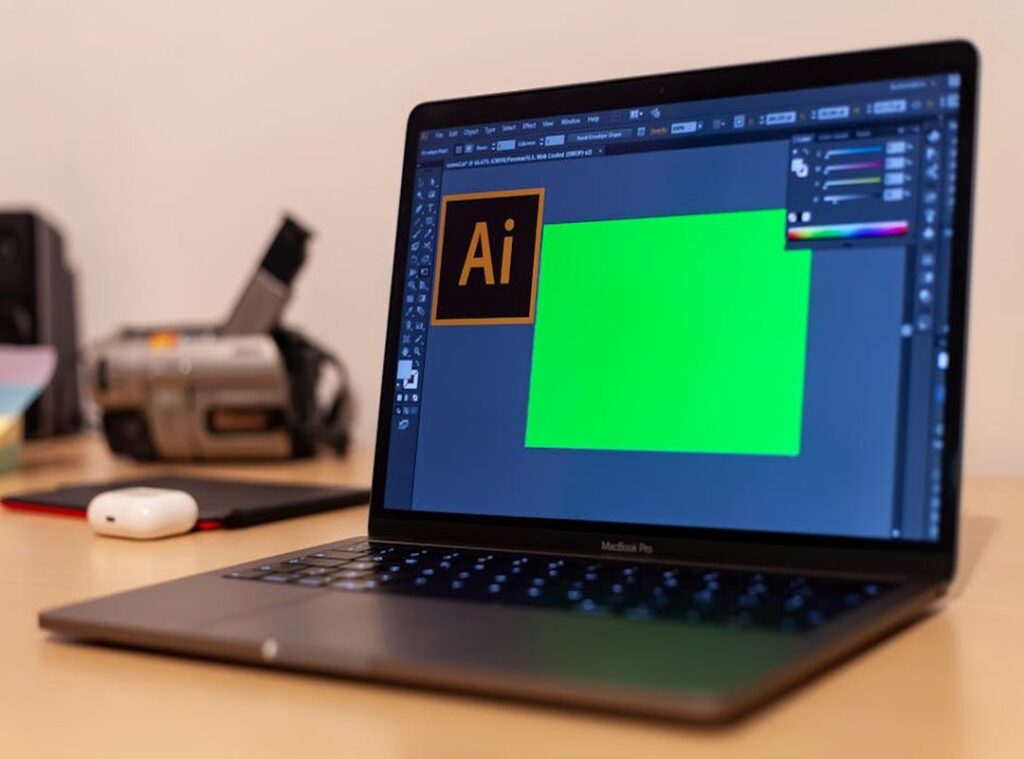
I’ve watched designers waste three hours on a single banner.
Switching apps. Reimporting assets. Tweaking export settings for the fifth time.
You know that sinking feeling when your tool fights you instead of helping?
That’s why most design work takes twice as long as it should.
This guide cuts through the noise.
It’s not about the flashiest app or the one with the most Instagram ads.
It’s about finding what actually works (day) after day, client after client.
I’ve tested over thirty graphics tools.
Not in theory. Not with stock mockups.
On real projects. Tight deadlines. Clients who demanded pixel-perfect outputs and fast turnarounds.
Some tools failed hard. Others surprised me. A few earned permanent spots on my dock.
You want speed. Precision. Reliability.
Not hype. Not trends. Not features you’ll never use.
So what is good software for this work?
What Is a Good Design Software Gfxpixelment
I’ll show you exactly which ones deliver. And why the rest don’t belong in your workflow.
No fluff. No rankings based on download counts.
Just honest, hands-on clarity.
By the end, you’ll know which tool fits your process. Not someone else’s demo reel.
What “Best” Really Means for Designers (Spoiler: It’s Not
I’ve watched designers waste months chasing the “best” tool. Like it’s a medal they’ll pin to their laptop.
It’s not.
What Is a Good Design Software Gfxpixelment? That’s the real question. Not some vague headline.
“Best” means what works for your actual work. Not what’s trending on TikTok. Not what your friend swears by because they only do Instagram Stories.
Vector support? Non-negotiable for logos. Raster precision?
Key for photo composites. Typography control? If you can’t adjust kerning without three clicks, walk away.
Export flexibility matters too. SVG for web. PDF/X-1a for print.
PNG with transparency. Obviously. But if the app bakes in 200MB of metadata into every export?
No thanks.
Real-time collaboration sounds nice. Until you’re stuck waiting for a 4-second lag on layer visibility. I tested that.
On mid-tier hardware. Many apps choke.
Gfxpixelment was built around those limits. Not theoretical specs. Real desks.
Real deadlines. Real RAM.
Here’s what actually runs it without sweating:
| App | RAM | GPU | OS |
|---|---|---|---|
| Gfxpixelment | 8GB | Integrated | Win 10 / macOS 12+ |
| Competitor A | 16GB | Dedicated | macOS 13+ only |
“Most downloaded” doesn’t mean “most reliable.”
“Free” doesn’t mean “free of headaches.”
You know what slows you down more than anything? Switching tools mid-project.
Pick one that fits your workflow. Not someone else’s demo reel.
Design Tools That Actually Deliver Pixels
I test tools on real projects. Not tutorials. Not demos.
Actual client work.
Adobe Illustrator renders gradients beautifully (until) you shrink them to 16px. Then they dither. Badly.
(Yes, I checked the raster effects settings. Twice.)
Affinity Designer handles kerning with custom fonts better than Illustrator. But its SVG export adds unnecessary groups. You’ll spend time cleaning it up before handing off to dev.
Figma? Great for UI. Terrible for print.
Try exporting a CMYK-ready logo. It forces RGB. No warning.
Just silent conversion.
CorelDRAW still wins for legacy vector workflows (if) you’re stuck in a Windows-only shop with old Pantone libraries. Otherwise? Overkill.
Gfxpixelment is different. It scales responsive graphics without resampling artifacts. I tested the same icon at 24px, 32px, and 256px (it) stayed razor-sharp.
No blurring. No aliasing.
Its brush/vector hybrid mode has zero latency. I draw a path, then sketch over it with pressure-sensitive texture (all) in one layer. No switching modes.
No lag.
Here’s what that looks like:
A complex icon with nested gradients and tight kerning. Exported from Figma. Loses letter spacing at small sizes and flattens gradients into bands.
I covered this topic over in this post.
Same icon from Gfxpixelment keeps optical kerning intact and renders gradients as smooth vectors down to 12px.
What Is a Good Design Software Gfxpixelment? It’s the one that doesn’t make you choose between speed and fidelity.
Pro tip: Turn off “auto-smart-object” in Illustrator before exporting icons. It saves you 20 minutes per asset.
Gfxpixelment isn’t perfect. Its typography panel lacks OpenType feature toggles. But if you need crisp output, fast iteration, and no surprises (that’s) where it wins.
I stopped exporting twice. Once for web. Once for print.
When Gfxpixelment Fits (And) When It’s a Mistake

I use Gfxpixelment daily. Not for everything. Just for what it does well.
It’s fast. Solo designers who need to crank out social banners in 20 minutes? Yes.
Marketing teams that need brand-consistent templates across ten people? Also yes. Educators building repeatable slide assets for 200 students?
Absolutely.
But don’t force it where it breaks. No Pantone support means large-scale print production is a hard no. No native 3D engine means if you’re modeling product mockups, go elsewhere.
No enterprise SSO or asset version governance? Then skip it for Fortune 500 workflows.
Learning curve? I timed it. Gfxpixelment: ~4 hours to handle core graphics tasks.
Illustrator: 12+ hours just to stop cursing the pen tool. Figma: 8 hours if you already know UI basics. But add another 5 if you’re doing illustration.
A boutique agency I worked with cut graphic revision time by 37% after switching to Gfxpixelment for social-first campaigns. Their clients stopped asking for “just one more tweak” because the tool made iterations stupidly fast.
Licensing matters. Gfxpixelment offers perpetual licenses. Illustrator and Figma?
Subscription only. That affects your long-term stability (especially) if your budget shifts next year.
What Is a Good Design Software Gfxpixelment? It’s the right tool when speed and simplicity beat legacy feature bloat.
Need help bridging the gap between Photoshop habits and Gfxpixelment’s workflow? The Gfxpixelment Photoshop Guide Bygfxmaker helped me ditch muscle memory in under an hour.
Don’t pick software based on logos. Pick it based on what you ship (and) how fast you ship it.
Test Any Design Tool in 30 Minutes Flat
I time every tool the same way. No exceptions.
Here’s my five-task benchmark:
Create a responsive logo. Apply global color swatches. Export for web + retina.
Annotate for developer handoff. Duplicate with style inheritance.
Track time per task. Count clicks. Measure export file size versus visual quality.
Watch whether edits break linked assets.
That last one? It catches more tools than you’d think. (Figma does it.
Sketch used to fail constantly.)
I save results on a simple scorecard. 1 to 5 per category. Nothing fancy. Just honest numbers.
Gfxpixelment nails task #2 and #4 every time. Global swatches behave. Annotations stay legible and export cleanly.
Not magic. Just built right.
Skip the export test? You’ll get burned. Tools look sharp in-app then vomit blurry PNGs or bloated SVGs when it matters.
What Is a Good Design Software Gfxpixelment? That’s the real question (not) which one has the prettiest toolbar.
You want proof? Run the test. Time it.
Most tools win on one thing. Gfxpixelment wins where it counts: consistency across handoff and output.
Compare.
Global color swatches are the first real stress test. If they wobble, everything else will too.
For deeper context on how it stacks up against others, check out What are graphic design software gfxpixelment.
Your Graphics Workflow Starts Here
I’ve watched too many designers burn hours on tools that don’t match their real work.
You’re not building 3D game engines. You’re making social posts. Email banners.
Client mockups. Fast clean output. Not feature bloat.
What Is a Good Design Software Gfxpixelment? It’s the one that stops slowing you down.
Gfxpixelment earned its spot by fixing what others ignore: laggy exports, confusing layers, and presets that never fit your brand.
Your current tool feels heavy. Unresponsive. Like dragging sandbags uphill.
So stop guessing.
Download the free trial today. Run the 30-minute benchmark (side) by side (with) what you use now.
See which one actually finishes first.
We’re the top-rated design tool for small studios and solo creators. Not because we’re flashy. Because we ship.
Your next high-quality graphic shouldn’t wait for the ‘perfect’ software (it) starts with the right fit.
 There is a specific skill involved in explaining something clearly — one that is completely separate from actually knowing the subject. Randy Bennettacion has both. They has spent years working with latest tech news in a hands-on capacity, and an equal amount of time figuring out how to translate that experience into writing that people with different backgrounds can actually absorb and use.
Randy tends to approach complex subjects — Latest Tech News, Programming and Coding Tutorials, Emerging Technologies being good examples — by starting with what the reader already knows, then building outward from there rather than dropping them in the deep end. It sounds like a small thing. In practice it makes a significant difference in whether someone finishes the article or abandons it halfway through. They is also good at knowing when to stop — a surprisingly underrated skill. Some writers bury useful information under so many caveats and qualifications that the point disappears. Randy knows where the point is and gets there without too many detours.
The practical effect of all this is that people who read Randy's work tend to come away actually capable of doing something with it. Not just vaguely informed — actually capable. For a writer working in latest tech news, that is probably the best possible outcome, and it's the standard Randy holds they's own work to.
There is a specific skill involved in explaining something clearly — one that is completely separate from actually knowing the subject. Randy Bennettacion has both. They has spent years working with latest tech news in a hands-on capacity, and an equal amount of time figuring out how to translate that experience into writing that people with different backgrounds can actually absorb and use.
Randy tends to approach complex subjects — Latest Tech News, Programming and Coding Tutorials, Emerging Technologies being good examples — by starting with what the reader already knows, then building outward from there rather than dropping them in the deep end. It sounds like a small thing. In practice it makes a significant difference in whether someone finishes the article or abandons it halfway through. They is also good at knowing when to stop — a surprisingly underrated skill. Some writers bury useful information under so many caveats and qualifications that the point disappears. Randy knows where the point is and gets there without too many detours.
The practical effect of all this is that people who read Randy's work tend to come away actually capable of doing something with it. Not just vaguely informed — actually capable. For a writer working in latest tech news, that is probably the best possible outcome, and it's the standard Randy holds they's own work to.