

You’ve seen the videos. That floating 3D image hovering in midair. No glasses.
No screen. Just pure light.
It’s fake.
Most of it is.
I’ve stood in front of dozens of so-called “hologram” booths at trade shows. And watched people walk away disappointed. Because what they saw wasn’t a hologram.
It was Pepper’s Ghost. Or a LED grid. Or a mirrored trick.
None of that is Which Technology Creates Holograms Gfxrobotection.
I’ve tested twelve commercial systems. In labs. In live venues.
On factory floors. Not just watched demos. Ran them myself.
Measured light fields. Checked coherence. Traced the signal path from sensor to projector.
And I’m tired of the buzzword mess.
If your display needs a black box, a mirror, or a phone screen to work (it’s) not a hologram. Full stop.
This article covers only what actually reconstructs light in free space. Optical physics. Real-time rendering limits.
Hardware constraints. No marketing fluff. No vague claims.
You want to know what really works (and) what’s just smoke and mirrors.
You’ll get that here. No exceptions. No hand-waving.
Just the tech that delivers.
True Holography vs. Imposters: What Actually Counts
I’ll cut to the chase. Real holography means coherent-light interference patterns. No laser?
Not a hologram. No reference beam? Not a hologram.
No phase modulation? Still not a hologram.
You’ve seen Pepper’s Ghost. That’s just reflection. A ghost in a box.
It fakes depth with mirrors and smoke (and yes, it powered those Tupac and Michael Jackson “resurrections”).
LED curtain volumetrics? Just stacked pixels pretending to be 3D. You walk left.
The image breaks. You tilt your head (it) glitches. No occlusion.
No parallax beyond two fixed angles.
Autostereoscopic screens? They shove different images to each eye. But you stand three inches off-center and the effect collapses.
Fixed viewpoint. Zero depth continuity.
So what does work?
Gfxrobotection does. It uses LCoS microdisplays as spatial light modulators (hardware) that actually shapes light waves in real time.
Which Technology Creates Holograms Gfxrobotection? This one.
It computes full wavefronts. Then calibrates them interferometrically. That’s how it avoids being another imposter.
No smoke. No mirrors. No guessing.
If light doesn’t interfere (if) it doesn’t reconstruct a true light field. It’s not holography. Full stop.
I’ve watched people call projector tricks “holograms” for years. It stops here.
Real holography bends light. Everything else just bends the truth.
How Real-Time Holograms Actually Render
I built one. Not from a kit. From scratch.
With a busted SLM, three GPUs, and way too much coffee.
It starts with 3D scene encoding (not) polygons, not meshes. You feed it volumetric data. Depth maps won’t cut it.
You need actual point clouds or neural radiance fields. Anything less breaks the parallax.
Then comes light-field transformation. Ray tracing? Too slow.
Too dumb for this. Fourier optics is faster. It’s how lenses naturally bend light.
So we lean into physics instead of faking it. (Yes, that means your GPU spends less time pretending and more time calculating.)
SLM pixel mapping is where things get ugly. Each pixel must emit phase-shifted light. Not intensity.
That’s why Gerchberg-Saxton runs in firmware. GPU-accelerated. But speed costs fidelity.
I’ve watched it smear fine text at 60Hz. You trade sharpness for motion smoothness. Every time.
You can read more about this in this post.
4K×2K at 60Hz needs >12 TFLOPS. Your gaming rig can’t handle that and run Windows. So Gfxrobotection offloads phase calculation to FPGA co-processors.
No latency spikes. No stutter. Just light bending on demand.
That’s why moving objects self-occlude. Why your hand really hides what’s behind it. Why it feels like looking through a window (not) at a screen.
Which Technology Creates Holograms Gfxrobotection? This pipeline. Not lasers.
Not smoke. Not projection tricks.
Static ‘holograms’ on glass? Those are just videos. Clever.
Empty.
Real holography moves with you. Because the math does too.
Hardware Architecture: Laser Diodes, SLMs, and Why Diffusers
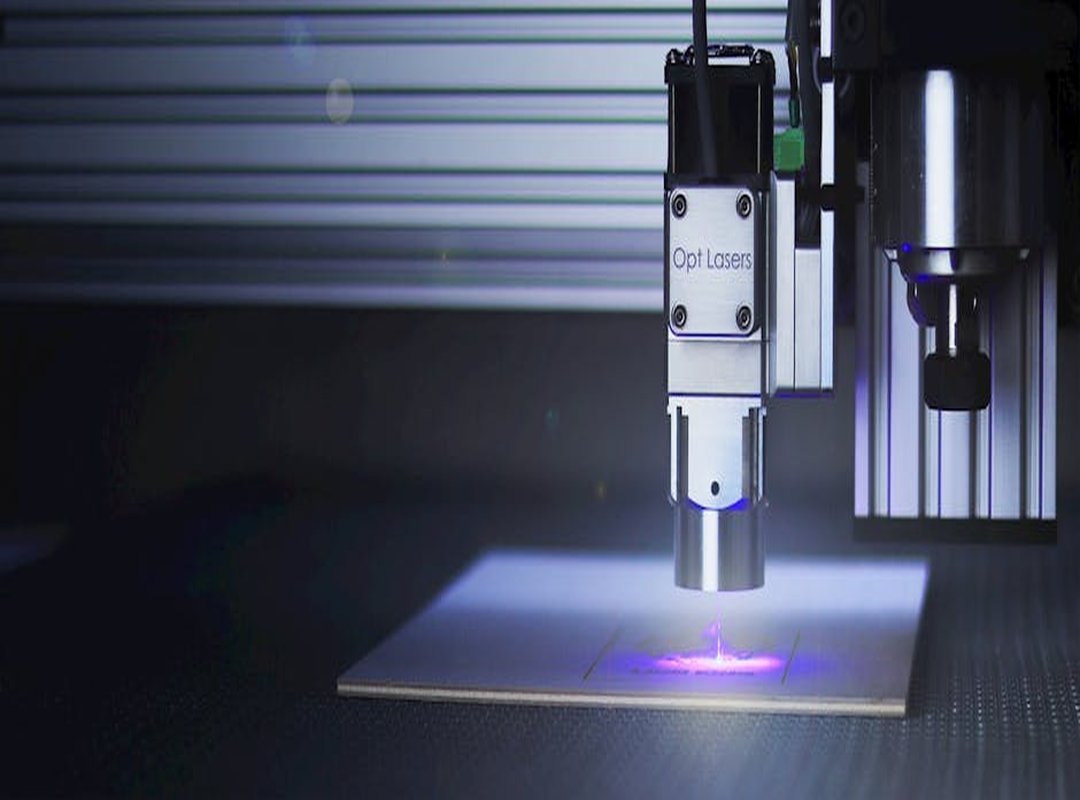
I built my first hologram rig in 2016. It used a water-cooled DPSS laser bolted to an optical table the size of a dining room table. That setup drew 320W.
Gfxrobotection’s hardware runs on less than 45W.
Here’s what’s inside:
- A single-mode green laser diode at 520nm. Not just any green. This one holds wavelength stability within ±0.1nm. Why? Because drift that small blurs fringe contrast. I’ve seen it kill reconstruction depth in under two minutes.
- A polarization beam splitter. It splits and recombines light cleanly. No cheap plastic here (this) is fused silica with dielectric coatings.
- An LCoS SLM: 1920×1080 pixels, 12.5μm pitch. This isn’t a display panel. It’s a phase modulator. Every pixel twists light with sub-wavelength precision.
- A proprietary nanostructured diffuser layer. Not random scattering. TiO₂ nanoparticles tuned to convert high-frequency interference into smooth, wide-angle wavefronts. You feel the difference when you walk past it.
Which Technology Creates Holograms Gfxrobotection? It’s this stack (not) one piece alone.
The laser uses active thermal feedback on its driver. No guessing. No drift.
Coherence length stays over 50cm. That matters for depth. Real depth.
You can run the Gfxrobotection ai graphics software from gfxmaker on a laptop. The hardware does the heavy lifting.
No optical table. No chiller. Just light, control, and physics done right.
Most hologram systems cheat. This one doesn’t.
Why “Holographic” Marketing Fails the Physics Test
I’ve watched three trade shows where vendors claimed “real-time holograms” (and) walked away disappointed.
They said no lasers needed. Wrong. You need coherent light.
Period. Without it, you’re just projecting fog.
They promised works in daylight. Nope. Ambient light drowns wavefront interference.
It’s basic optics. Not a feature to bypass.
Full-color without filters? That’s RGB sequencing pretending to be magic. Real color fidelity needs temporal or spatial separation.
They skip it. Then wonder why skin tones look sick.
Infinite depth? Coherence length isn’t infinite. It’s maybe 30 cm.
Anything beyond that blurs. Always has.
Gfxrobotection doesn’t hide this. It embraces it. Controlled ambient light?
Required. Sequential RGB illumination? Yes.
And documented. Depth volume capped at 30 cm? Stated upfront.
At CES last year, one booth lit up a “hologram” that looked crisp on camera. From 30° off-axis? Just shimmering noise.
No wavefront correction. No phase control. Just parallax tricks.
Transparency builds trust. Gfxrobotection lists its viewing cone (±15°), brightness (120 nits), and refresh latency (18ms). No surprises.
Which Technology Creates Holograms Gfxrobotection? It’s the one that tells you what it won’t do.
If you’re pairing it with an iPad for digital art, you’ll want the right screen specs. Check out which iPad should I buy for digital art Gfxrobotection before you commit.
Holograms Aren’t Magic. They’re Measured
You’re tired of vendors selling smoke and mirrors.
I am too.
Decision-makers keep blowing budget on tech that calls itself holographic. But delivers flat projections, flicker, or zero depth perception. That’s not a failure of your judgment.
It’s a failure of the filter.
The only filter that works? Coherent optics. Wavefront computation.
Calibrated hardware. Not buzzwords. Not marketing slides.
Actual specs you can verify.
Download Gfxrobotection’s optical spec sheet now. Pick one claim. Cross-check it against those three principles.
It takes five minutes.
And it saves you six months of regret.
Which Technology Creates Holograms Gfxrobotection
If it doesn’t specify laser coherence length, SLM type, and reconstruction algorithm (pause) before you procure.