

A robotic arm in an automotive line freezes mid-swing because its camera sees a blur instead of a bolt.
Glare. Dust. Oil mist.
A fingerprint on the lens. That’s all it takes.
I’ve watched it happen more times than I care to count.
And every time, someone says “it’s just a graphics issue”. Like that makes it okay.
It’s not okay. It costs money. It stalls production.
It erodes trust in the whole system.
Robotic Application Gfxrobotection isn’t about making things look pretty.
It’s about keeping vision-guided robots seeing clearly when heat, vibration, and grime are doing their best to blind them.
I’ve designed protective layers for displays and sensors in factories, warehouses, and surgical robots.
Not theory. Not specs on a datasheet. Real parts on real machines.
Running for years.
You’re not here to read a definition.
You want to know how to stop glare from killing your camera feed.
How to keep an HMI readable after eight hours of coolant spray.
How to choose a coating that won’t peel off in a sterilization cycle.
This article gives you the exact criteria. No fluff. No jargon.
Just what works (and) why it works.
You’ll walk away knowing which environmental stressors actually matter for your setup.
And how to fix them before the next stoppage.
Why Your Screen Protector Keeps Failing on the Robot Arm
I’ve watched three different PET film protectors peel off a cobot HMI in under two weeks.
They’re not built for this. Not even close.
Abrasion from tooling contact wears them down fast. Coolants eat through them like acid. Thermal cycling cracks them open.
And electrostatic dust? It sticks like glue. Kills optical clarity overnight.
You think consumer-grade screen protectors are fine because they work on your phone. They’re not. PET film warps at 65°C.
Polycarbonate laminate holds up to 120°C. That’s not theoretical. That’s the difference between “works until lunch” and “still clear after a full shift.”
Vibration is the silent killer. Micro-movement between layers causes delamination. You won’t see it at first.
Then one day, the edge lifts (and) dust gets in. Game over.
Gfxrobotection solves this.
Gfxrobotection uses industrial adhesives, hardened coatings, and layered substrates designed for robotic environments (not) retrofitted from phone gear.
| Material | Shore D Hardness | Light Transmission | Temp Range |
|---|---|---|---|
| PET Film | 85 | 90% | -20°C to 65°C |
| Tempered Glass | 680 | 92% | -30°C to 80°C |
| Polycarbonate Laminate | 115 | 87% | -40°C to 120°C |
Glass looks tough. But it shatters under impact. Polycarbonate bends.
Survives.
Robotic Application Gfxrobotection isn’t about “better protection.” It’s about not failing.
You don’t need more maintenance. You need less.
Design Rules That Actually Matter
Optical fidelity isn’t optional. If your display distorts past 60°, your robot sees warped geometry. And misplaces parts.
EMI/RFI shielding compatibility? Non-negotiable. I’ve watched unshielded panels turn vision systems into noise magnets.
(Yes, even in a clean lab.)
Cleanability without residue sounds boring (until) you realize fingerprint oil degrades anti-reflective coatings fast. Wipe it wrong, and you’re recalibrating daily.
Anti-reflective performance under mixed lighting? This one bites people hard. LED + ambient = glare soup.
One documented case showed 12% misclassification in bin-picking due to glare-induced false positives. That’s not theoretical. That’s scrap.
Smooth integration with touch or gesture layers means no air gaps. No bubbles. No “kinda works.” If the layer lifts at the edge, your gesture tracking ghosts.
Adhesive choice is way more than stickiness. Low-outgassing silicones stop fogging on adjacent optics. Conductive adhesives keep grounding paths intact.
Skip either, and you’ll chase intermittent failures for weeks.
Hardness? Don’t overdo it. Rigid surfaces crack under robotic jostling.
They also transmit shock instead of absorbing it. Brittle fracture isn’t a risk. It’s a timeline.
Robotic Application Gfxrobotection fails when you treat these as checkboxes. They’re interlocked.
I pick optical fidelity first. Always. Because if the robot can’t see straight, nothing else matters.
You’re building for machines (not) marketing slides.
So ask yourself: Does my spec sheet reflect reality, or just hope?
Mounting, Calibration, and Keeping It Alive
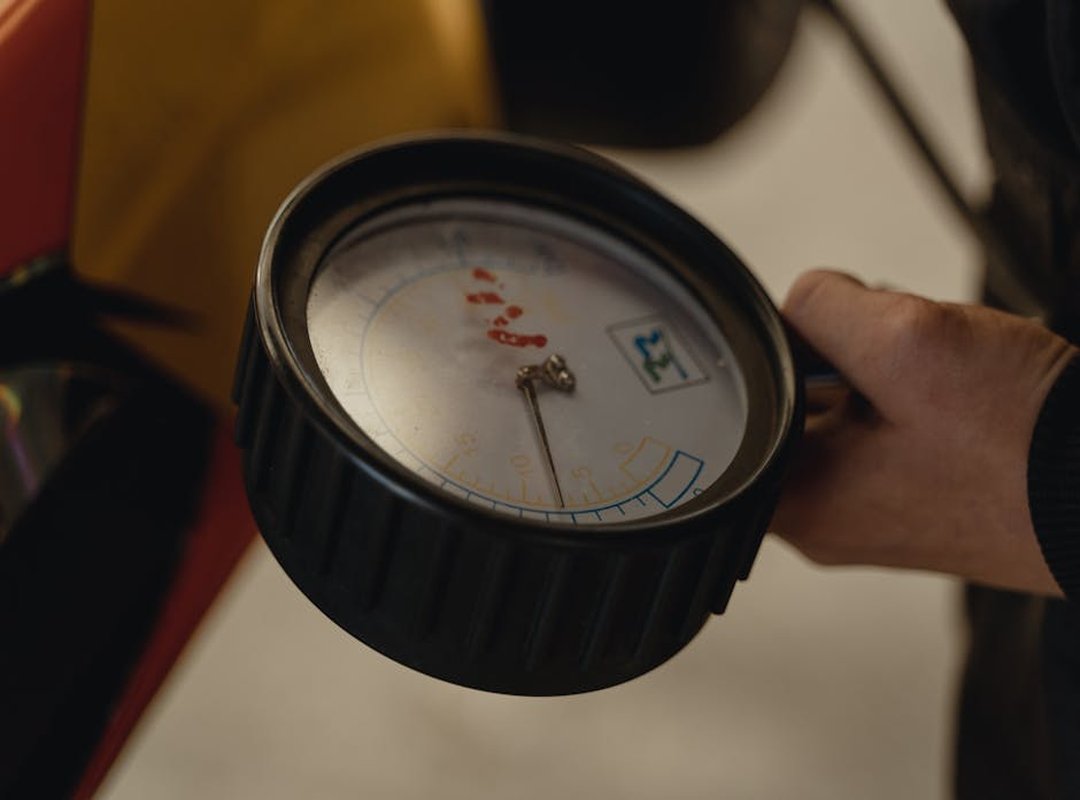
I’ve watched too many teams lose hours chasing ghost drift in their HMI registration.
Torque the bezel screws to 0.35 N·m. Not 0.4, not “tight enough.” Go past that, and you warp the housing. That warping?
It pushes alignment tolerance beyond <0.1mm. Then your touch points slide. Your users swear the screen is broken.
It’s not. It’s physics.
Don’t slap adhesive over heat-dissipating zones. I saw a unit cook its own sensor after three weeks of continuous runtime. Thermal paste needs airflow.
Adhesive kills it.
Graphics protection changes everything for calibration. Not just “a little.” The refractive index shift throws off pixel-to-mm mapping. Sometimes by as much as 2.7%.
You must re-validate after install. Not “should.” Must.
That’s why I always point people to Ai Graphic Design Gfxrobotection when they ask how to match layer specs to optical behavior.
Cleaning? Use 90% isopropyl alcohol. Acetone eats coatings.
Wipe weekly in dusty environments. Monthly in clean rooms.
Replace the protective layer after 18 months. Even if it looks fine. Recoating fails silently.
Noise in the feed? Grab a 10x loupe. Shine a controlled backlight from the side.
Contamination shows up as fuzzy blobs. Micro-scratches look like hairline fractures.
Which one is it?
If you’re seeing both. Stop. Something’s wrong upstream.
AI Vision Doesn’t Wait for Your Display
I’ve watched teams spend six months tuning a vision model. Only to ship it on hardware where the protective layer blurs edges by 0.3%. That kills sub-pixel detection.
No amount of training fixes bad optics.
Thermal management? It’s not optional anymore. Edge processors run hot.
If your display film can’t move heat (minimum) 0.8 W/m·K (you’ll) get ghosting, color shift, or worse: sensor drift.
Polarization matters now. Time-of-flight 3D sensors fail if your overlay scrambles polarization. And UV stability?
Outdoor robots bake in sunlight. Cheap films yellow in weeks. Then contrast drops.
Then accuracy drops.
ISO/IEC TR 23055-2 is coming. Draft standard. Three new tests: thermal cycling under load, abrasion resistance during robotic arm motion, and glare-induced misread rates in direct sun.
None of this is theoretical. I saw a warehouse bot mistake a shadow for a pallet edge (because) the film degraded unevenly.
You’re not protecting glass anymore. You’re protecting perception.
That’s why “Robotic Application Gfxrobotection” isn’t marketing fluff. It’s physics with deadlines.
What Is Digital? It’s the only system I’ve seen that treats optical integrity like firmware. Versioned, tested, and tied directly to sensor specs.
Protect the Pixels. Not Just the Parts
I’ve seen too many robots stall because nobody checked the display.
Not the motor. Not the sensor. The screen.
Unplanned downtime starts there. Vision drift starts there. You know it.
Material choice matters. Environment kills optics. Validation isn’t optional (it’s) day one.
You skipped it last time. I get it. But this time?
Do it.
Audit one robotic workstation this week.
Photograph the display. Note heat, dust, vibration. Cross-check against the 5 design requirements.
No guesswork. No “we’ll fix it later.” Later is when the line stops.
Robotic Application Gfxrobotection means your robot sees through the pixels (not) around them.
So protect the pixels.
Because your robot doesn’t see the world.
It sees through them.
 There is a specific skill involved in explaining something clearly — one that is completely separate from actually knowing the subject. Randy Bennettacion has both. They has spent years working with latest tech news in a hands-on capacity, and an equal amount of time figuring out how to translate that experience into writing that people with different backgrounds can actually absorb and use.
Randy tends to approach complex subjects — Latest Tech News, Programming and Coding Tutorials, Emerging Technologies being good examples — by starting with what the reader already knows, then building outward from there rather than dropping them in the deep end. It sounds like a small thing. In practice it makes a significant difference in whether someone finishes the article or abandons it halfway through. They is also good at knowing when to stop — a surprisingly underrated skill. Some writers bury useful information under so many caveats and qualifications that the point disappears. Randy knows where the point is and gets there without too many detours.
The practical effect of all this is that people who read Randy's work tend to come away actually capable of doing something with it. Not just vaguely informed — actually capable. For a writer working in latest tech news, that is probably the best possible outcome, and it's the standard Randy holds they's own work to.
There is a specific skill involved in explaining something clearly — one that is completely separate from actually knowing the subject. Randy Bennettacion has both. They has spent years working with latest tech news in a hands-on capacity, and an equal amount of time figuring out how to translate that experience into writing that people with different backgrounds can actually absorb and use.
Randy tends to approach complex subjects — Latest Tech News, Programming and Coding Tutorials, Emerging Technologies being good examples — by starting with what the reader already knows, then building outward from there rather than dropping them in the deep end. It sounds like a small thing. In practice it makes a significant difference in whether someone finishes the article or abandons it halfway through. They is also good at knowing when to stop — a surprisingly underrated skill. Some writers bury useful information under so many caveats and qualifications that the point disappears. Randy knows where the point is and gets there without too many detours.
The practical effect of all this is that people who read Randy's work tend to come away actually capable of doing something with it. Not just vaguely informed — actually capable. For a writer working in latest tech news, that is probably the best possible outcome, and it's the standard Randy holds they's own work to.