
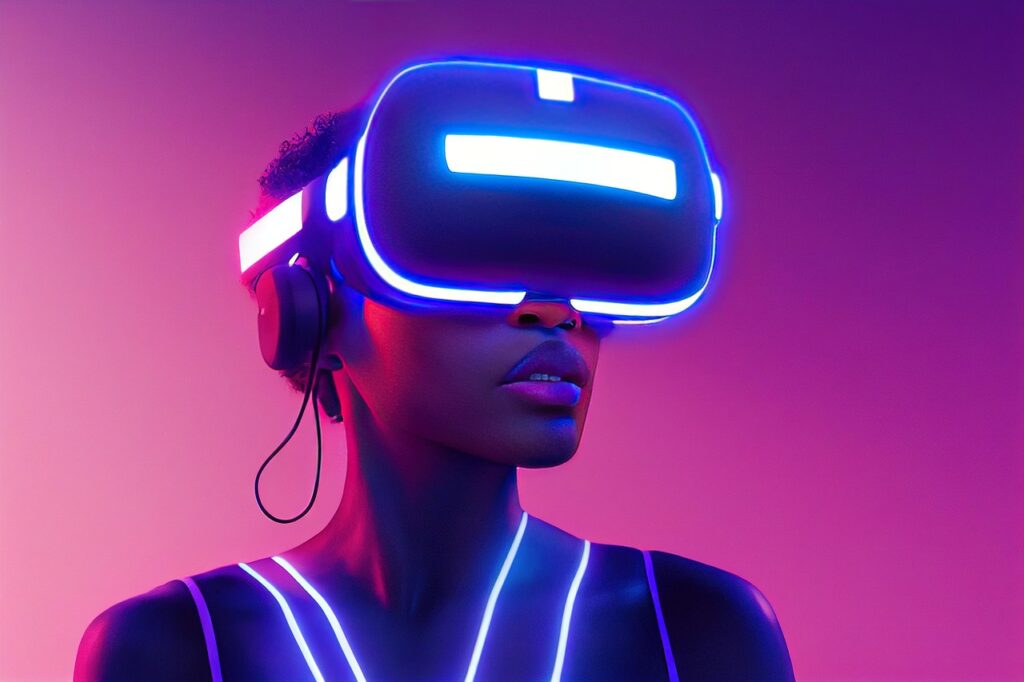
What AR Brings to the Classroom
AR isn’t sci fi anymore it’s on school desks, in labs, and part of lesson plans. By layering digital visuals and data onto the real world, augmented reality lets students stay rooted in their environment while interacting with new layers of content. No need to close your eyes and imagine the inside of a cell or the gears of a turbine you can scan, see, and move through it in real time.
By 2026, AR has stopped being a gimmick. In STEM, art, and tech education especially, it’s becoming essential. Phones and headsets shift from distractions to tools. Instead of zoning out, students lean in. They’re exploring virtual circuits, rendering 3D sculptures, or solving complex systems through trial and error minus the risk or waste.
One standout example: medical programs now use AR to let students perform layered, virtual dissections. No mess, no risk, but full on practice. By the time students get to the real instruments, their hands and brains are already trained. AR isn’t replacing learning. It’s adding dimension to it.
Personalized, Immersive Learning
AR isn’t just flashy tech it’s fine tuned to how students actually learn. Visual learners don’t just see diagrams anymore; they interact with rotating molecules, branching trees, or historical scenes built in 3D. Kinesthetic learners, the hands on types, benefit when digital layers guide them through a mechanical teardown or map out a math problem across their physical workspace. The tech adapts, and students stay more engaged because the content speaks their language.
Teachers benefit, too. AR platforms now offer real time analytics if a student checks out, skips interaction, or lingers too long on a task, instructors can pivot mid lesson. It’s flexibility baked into the system, empowering teachers to teach smarter.
Then there’s collaboration. Multi user AR tools allow students to co lab on the same 3D model in a shared virtual space whether they’re solving a physics problem across desks or continents. It’s not just learning anymore. It’s a shared problem solving experience that sticks.
From Passive to Participatory

The days of students zoning out in front of a whiteboard are numbered. In AR enhanced classrooms, exploration replaces lectures. Instead of reading about Newton’s laws, students watch them unfold in real time simulations. History becomes a walk through experience imagine stepping into a medieval town or witnessing a civil rights march from the inside.
This isn’t about flashy distraction it’s about immersion that sticks. When learners interact with the material, they engage more deeply and remember more. Data backs it up: schools integrating AR are seeing stronger test scores and higher attention rates. Education stops being a one way delivery. It becomes personal, tactile, and surprisingly compelling.
Real World Applications
AR isn’t just a flashy gimmick it’s changing how students train for real jobs and understand complex ideas. In technical education, automotive students now use AR to interact with a 3D engine system before they ever crack open a hood. They can rotate, disassemble, and reassemble parts virtually, understanding how the components fit together without the risk (or cost) of breaking anything.
Language classes are going contextual. AR labels appear on real world objects table, door, window in the student’s native language and the language they’re learning. It’s vocabulary acquisition grounded in actual environments, not just flashcards.
And biotech? AR lets learners visualize microscopic processes like gene editing or protein synthesis with clarity that textbooks can’t match. These are topics too small, fast, or abstract for traditional labs to handle alone.
For more on biotech’s growing hand in all this, check out Why Biotech Is the Next Big Thing in Tech.
Accessibility & Future Outlook
The high cost of early AR hardware used to limit who got access. That’s changed. Today, budget friendly AR apps run on basic tablets and smartphones. Entry level headsets are showing up in classrooms from rural towns to urban districts. AR isn’t just a private school experiment anymore it’s reaching places where tech used to be a luxury.
As infrastructure upgrades faster broadband, decentralized cloud processing, more reliable networks schools are finally catching up with the tools. The result? AR is becoming a core learning experience, not a side project. Countries from Finland to Kenya are building national strategies around it.
What’s next is smarter integration. AR alone is powerful, but when synced with AI and learning analytics, it gets precise. Think tailored lessons that adapt in real time, or virtual tutors that respond to individual student needs. We’re heading toward classrooms that don’t just teach they listen, adapt, and evolve.
 There is a specific skill involved in explaining something clearly — one that is completely separate from actually knowing the subject. Randy Bennettacion has both. They has spent years working with latest tech news in a hands-on capacity, and an equal amount of time figuring out how to translate that experience into writing that people with different backgrounds can actually absorb and use.
Randy tends to approach complex subjects — Latest Tech News, Programming and Coding Tutorials, Emerging Technologies being good examples — by starting with what the reader already knows, then building outward from there rather than dropping them in the deep end. It sounds like a small thing. In practice it makes a significant difference in whether someone finishes the article or abandons it halfway through. They is also good at knowing when to stop — a surprisingly underrated skill. Some writers bury useful information under so many caveats and qualifications that the point disappears. Randy knows where the point is and gets there without too many detours.
The practical effect of all this is that people who read Randy's work tend to come away actually capable of doing something with it. Not just vaguely informed — actually capable. For a writer working in latest tech news, that is probably the best possible outcome, and it's the standard Randy holds they's own work to.
There is a specific skill involved in explaining something clearly — one that is completely separate from actually knowing the subject. Randy Bennettacion has both. They has spent years working with latest tech news in a hands-on capacity, and an equal amount of time figuring out how to translate that experience into writing that people with different backgrounds can actually absorb and use.
Randy tends to approach complex subjects — Latest Tech News, Programming and Coding Tutorials, Emerging Technologies being good examples — by starting with what the reader already knows, then building outward from there rather than dropping them in the deep end. It sounds like a small thing. In practice it makes a significant difference in whether someone finishes the article or abandons it halfway through. They is also good at knowing when to stop — a surprisingly underrated skill. Some writers bury useful information under so many caveats and qualifications that the point disappears. Randy knows where the point is and gets there without too many detours.
The practical effect of all this is that people who read Randy's work tend to come away actually capable of doing something with it. Not just vaguely informed — actually capable. For a writer working in latest tech news, that is probably the best possible outcome, and it's the standard Randy holds they's own work to.